
Social Inflation is Reshaping Claims: Death by a Thousand Cuts, the Nuclear Option or Both?
By: Joel Zylstra, Chief Claims Officer
In the world of insurance claims, the environment has shifted in both subtle and seismic ways. Our industry has always navigated cycles of inflation, legal changes, technological complexity, and economic pressures; but today’s environment presents unprecedented challenges. Social inflation is no longer a background trend. It is reshaping claims frequency, severity, and predictability across nearly every line of business.
It forces one to ask if insurers are being slowly eroded by countless small pressures, a “death by a thousand cuts?” Or are we facing a more explosive threat, in the form of nuclear jury verdicts and litigation costs? The truth is, both forces are at play, and together they are redefining the claims landscape.
Death By a Thousand Cuts: Inflationary & Incremental Increases in Individual Claims
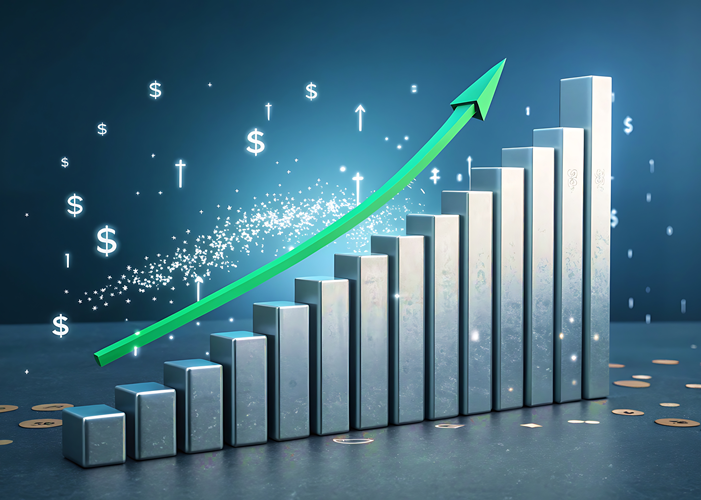
For years, traditional claim severity has been rising across all industries. This past decade has marked a tipping point, with liability claims costs in the U.S. rising 57% in 10 years, reaching a 20-year high in 2023. These increases have outpaced standard economic inflation by 7%, but they aren’t just tied to medical inflation and wage growth. Shifting jury sentiment, evolving legal standards, and a cultural willingness to award significantly larger damages are also major driving factors.1
Tort costs in the United States increased more than twice as fast as average inflation from 2016-2022. For the decade 2010-2019, social inflation contributed to $20.7 billion in losses and 14% of total claims paid in commercial auto alone. This has made it increasingly difficult to forecast claim development or reserve adequacy using standard economic modeling.2
These systemic, industry-wide pressures are the “thousand cuts” that gradually bleed underwriting margins, distort pricing adequacy, and force reserve strengthening year after year.
The Nuclear Threat: Explosive Rise of Nuclear Jury Awards
While incremental increases in claim severity strain the system, the explosive growth of “nuclear verdicts” (jury awards of $10 million or more) represents an existential challenge to the entire industry. These verdicts are no longer outliers; they constitute a structural risk phenomenon. Key drivers include rising anti-corporate sentiment among jurors, use of plaintiff reptilian strategies, and a litigation funding industry valued at $17.5 billion today and projected to reach $67.2 billion by 2036.3
Between 2013 and 2022:
- 48 % all nuclear verdicts in the U.S. were between $10M and $20M
- One-third ranged from $20M to $50M
- 19% exceeded $50M
- 115 verdicts surpassed $100M2 (also known as thermonuclear)
- The median product liability nuclear verdict increased 50%, from $24M to $36M.4
- Nuclear verdict payouts reached $14.5 billion, with the number $100M+ verdicts increasing materially.1
For insurers and claims executives, these nuclear verdicts are the equivalent of sudden catastrophic losses, but without seasonal or geographic predictability.
The Claims Officer’s Reality: Navigating Thousands of Cuts and the Nuclear Threat
Given these conditions, the claims environment is fundamentally different than ever before. This mandates adjustments to how claims organizations operate.
-
Reserving Must be More Dynamic
A mentor of mine once said, “The key is early investigation, early reserving, and early resolution.” Claims professionals must be dynamic in obtaining accurate information, reserving the claim in a timely manner, and focusing on swift resolution of the claim.
-
Claims Team Expertise is More Critical Than Ever
In an ever-evolving technology landscape, claims professionals must be more than paper adjustors. The claims professional’s job is not that of a factory worker, repeating the same processes with predictable outcomes. Today’s claims professionals must be specialists, not only adjusting losses but also interpreting societal trends, legal shifts, and media narratives. Public sentiment and outside factors now influence outcomes almost as much as factual liability.
-
Defense Strategies Must Evolve
Lawyers really matter. Longer litigation, sometimes fueled by third-party funding, demands earlier investigation and reporting, appropriate and timely evaluation of settlement windows. and the ability to try a case if reasonable settlement cannot be obtained.
Stay In Front of Social Inflation: Actual Intelligence Meets Artificial Intelligence
Social inflation isn’t a single trend; it is a confluence of forces reshaping the risk environment. For insurers, this is a call to action. To prepare for this socially-inflated future, we must:
- Invest in advanced analytics and AI to identify severity drivers earlier.
- Build and strengthen partnerships with those who understand early investigation, value, negotiation, and modern jury psychology.
- Equip and empower claims team members with the proper tools, training, and support to influence outcomes before cases escalate.
Understanding that social inflation is both a slow bleed and potential detonation is key to helping claims teams succeed under these chaotic circumstances. It is the responsibility of claims leaders to recognize both dynamics in order to position their respective claims organizations for success in an ever-changing and increasingly challenging environment.